The Department of computer science Engineering AI & ML was established in the year 2022. The Department is committed to continuously improving the quality of education by enhancing the knowledge of Students & Staff. With the increasing demand for computer science & Technology in the development of software industries, the department has met the requirements with the latest computing machines and software.
Our Vision
To lead the way in the creation and application of cutting-edge Computer science and engineering (AIML) technologies, advancing the frontiers of knowledge, and empowering future generations to drive innovation and transformation on a global scale.
Our Mission
To train students with a strong conceptual understanding using innovative pedagogies, empowering them to excel in the dynamic fields of Artificial Intelligence and Machine Learning.
To imbibe professional, research, and entrepreneurial skills with a commitment to the nation’s development at large.
To strengthen the industry-institute Interaction.
To promote life–long learning with a sense of societal & ethical responsibilities.
PEO1: To develop an ability to identify and analyze the requirements of Computer Science and Engineering in design and providing novel engineering solutions..
PEO2: To develop abilities to work in team on multidisciplinary projects with effective communication skills, ethical qualities and leadership roles.
PEO3: To develop abilities for successful Computer Science Engineer and achieve higher career goals.
PSO1: To develop abilities to model real world problems using appropriate algorithms, computational theories and programming languages in the area of AI and ML.
PSO2: To develop software applications and products in specialized areas of Artificial Intelligence and Machine Learning.
1. Engineering knowledge: Apply the knowledge of mathematics, science, engineering fundamentals, and an engineering specialization to the solution of complex engineering problems.
2. Problem analysis: Identity, formulate, review research literature, and analyze complex engineering problems reaching substantiated conclusions using the first principles of mathematics, natural sciences, and engineering sciences.
3. Design/development of solutions: Design solutions for complex engineering problems and design system components or processes that meet the specified needs with appropriate consideration for public health and safety and cultural, societal, and environmental considerations.
4. Conduct investigations of complex problems: Use research-based knowledge and research methods including design of experiments, analysis, interpretation of data, and synthesis of the information to provide valid conclusions.
5. Modern tool usage: Create, select, and apply appropriate techniques, resources, and modern engineering and IT tools including prediction and modelling to complex engineering achieves with an understanding of the limitations.
6. The engineer and society: Apply to reason informed by the contextual knowledge to assess societal, health, safety, legal and cultural issues and the consequent responsibilities relevant to the professional engineering practice.
7. Environment and sustainability: Understand the impact of professional engineering solutions in societal and environmental contexts and demonstrate the knowledge of and need for sustainable development.
8. Ethics: Apply ethical principles and commit to professional ethics and responsibilities and norms of the engineering practice.
9. Individual and team work: Function effectively as an individual and as a member or leader in diverse teams and in multidisciplinary settings.
10. Communication: Communicate effectively on complex engineering activities with the engineering community and with society at large, such as being able to comprehend and write effective reports and design documentation, make effective presentations and give and receive clear instructions.
11. Project management and finance: Demonstrate knowledge and understanding of the engineering and management principles and apply these to one’s own work, as a member and leader in a team, to manage projects and in multidisciplinary environments.
12. Life-long learning: Recognize the need for, and have the preparation and ability to engage in independent and life-long learning in the broadest context of technological change.
Department Calender

Time Table
Internal Assessment

IA Scheme and Syllabus
Mentor – Mentee List


Laboratories
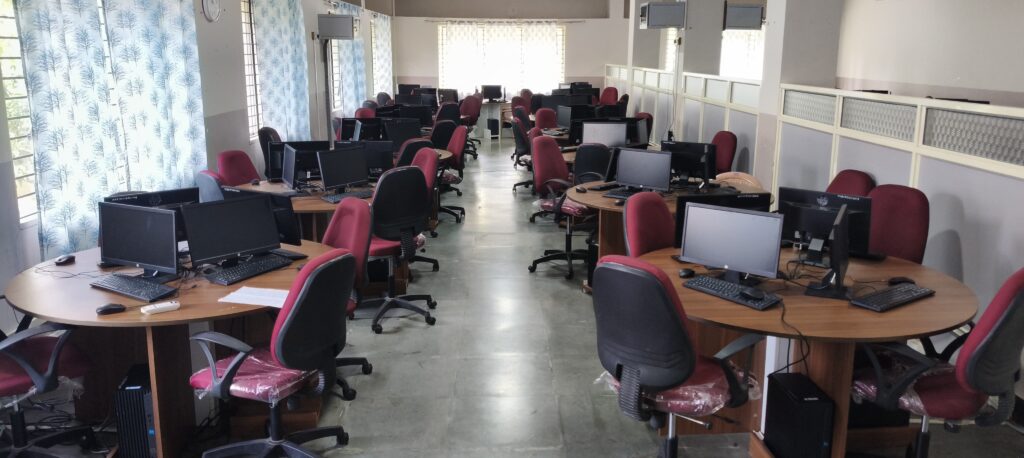
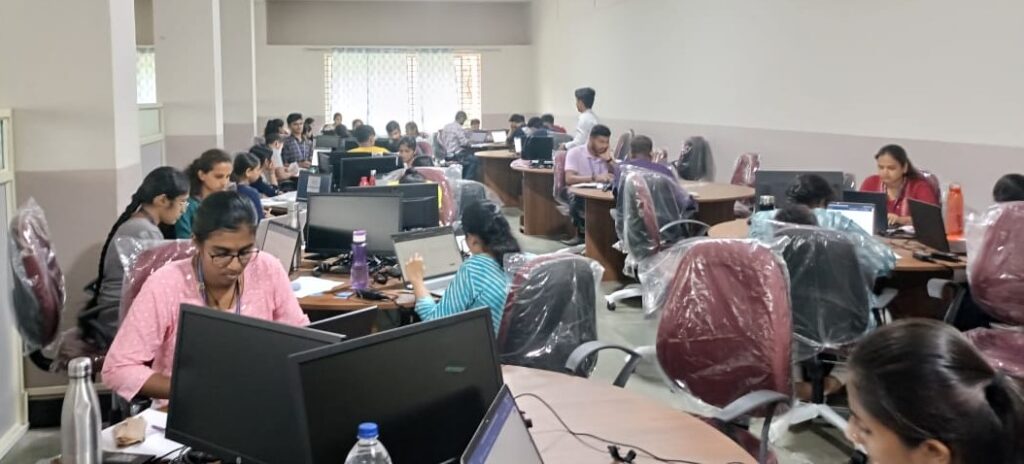
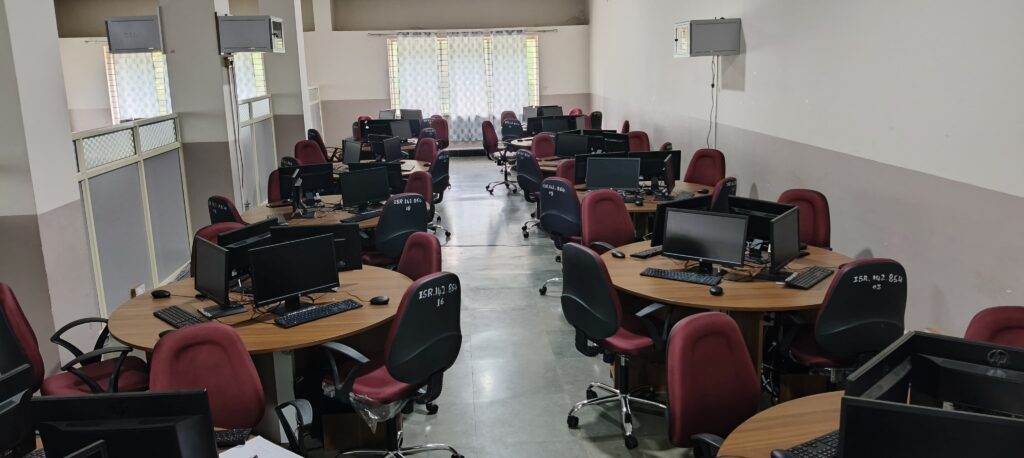
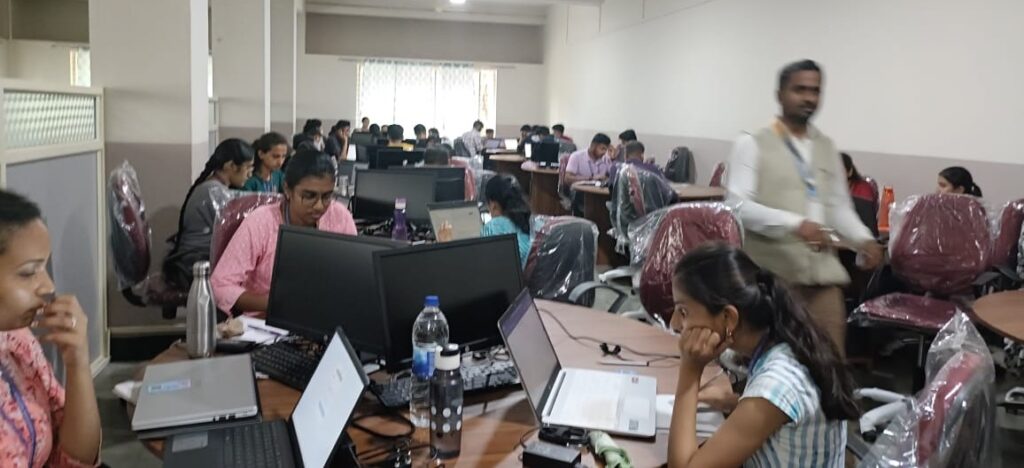
Lab Name : 1G4A
Machine Learning, Generative AI, Python Programming, MongoDB lab
Carpet Area(Sq. m): 114
Investment (Lakhs) : 36
System Configuration :
Device Name: HP
Processor: 12th Gen Intel(R) Core(TM) i5-12500, 3.00 GHz
6 performance cores + 4 efficiency cores (Total 10 cores, 16 threads)
Installed RAM: 16.0 GB (15.7 GB usable)
System Type: 64-bit operating system, x64-based processor
Edition: Windows 10 Pro
Version: 21H1